EN
EN

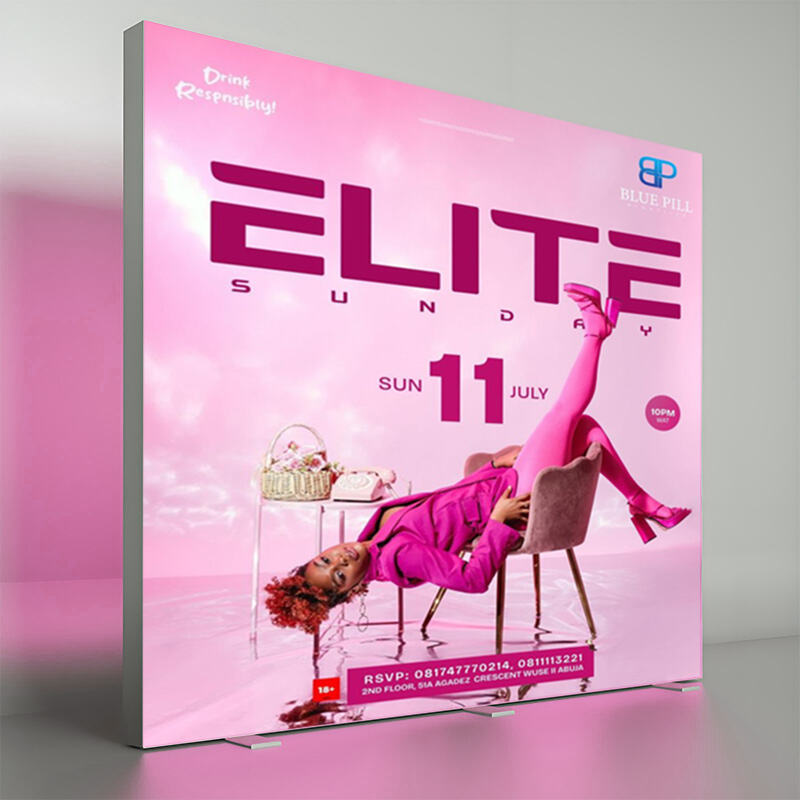
Structural Design and Installation Flexibility
The structural framework of display systems directly dictates installation feasibility, maintenance access, and long-term adaptability in commercial environments.
Rigid Frame Architecture of LED Light Box Display Systems
Most LED light boxes come with aluminum frames that have been powder coated for protection, along with built-in brackets for mounting. These frames form enclosures that can't really be changed once installed because they need exact wall dimensions and permanent anchors in place. That means if someone wants to move them after installation, it's pretty much impossible. They do last a long time in busy spots where people walk through constantly, but there's a catch. When parts need replacing or when sizes need changing, the whole thing basically has to come apart first. This makes maintenance work more complicated than it needs to be sometimes.
SEG Frame System: Lightweight, Modular, and Tool-Free Assembly
SEG systems typically feature extruded aluminum frames with built-in silicone channels that make changing graphics super easy without any tools needed. The panels snap together at the corners using those interlocking joints, so installers can adjust widths and heights on site pretty flexibly around plus or minus 15%, which meets most display industry specs. Because these structures are so light weight, they work great for hanging from ceilings, fitting into partitions, and even creating curves that would be tough to pull off with traditional rigid frames. And this flexibility actually cuts down on how much extra support structures need in retrofit jobs, saving somewhere between 30% to maybe 50% on those reinforcement costs depending on the project specifics.
Lighting Performance and Long-Term Optical Reliability
Brightness Uniformity and CRI: LED Light Box Display vs. Edge-Lit SEG Backlights
When it comes to brightness distribution, LED light boxes really shine over traditional edge-lit SEG systems. Most LED panels maintain around 85% uniformity across their surface area while SEG setups tend to develop those annoying bright spots right next to where the lights are mounted. For businesses that need accurate color representation, this matters a lot. LED technology typically hits CRI scores above 90, meaning brand colors look consistent even when lighting conditions change throughout the day. SEG frames with their side-mounted LED strips just can't match that level of color accuracy, usually falling somewhere below 80 on the CRI scale because of how light spreads through these displays, especially noticeable in bigger screens. And let's not forget about outdoor performance either. High output LED modules can push between 1500 to 2000 nits, making text and images clearly visible even under direct sunlight. Standard SEG backlights? They barely reach 800 nits before starting to degrade faster than most would like.
Thermal Management and Lumen Maintenance Over Time
How well heat gets dispersed has a big impact on how long lights stay bright. Solid LED light boxes come with built-in heat sinks and thermal pads that keep temperatures from rising much more than 15 degrees Celsius above room level. This kind of setup meets TCO certification standards for brightness retention too. Most certified units maintain about 90% of their original brightness after running for 30,000 hours, dropping to around 70% after reaching 50,000 hours according to TM-21 standards set by the Illuminating Engineering Society. On the flip side, those slim SEG frames actually trap heat around the edges of the lighting modules, which speeds up the loss of brightness by roughly 15 to 22 percent within just 18 months. When manufacturers get thermal management right, they can make these LED displays last way longer - up to approximately 87,500 hours total. That works out to over seven years if used 12 hours each day, plus there's less need for adjusting brightness settings throughout the year, cutting down on maintenance tasks by about half.
Graphic Media Compatibility and Visual Fidelity
Color Accuracy, Glare Control, and Print Clarity: Fabric (SEG) vs. Rigid Vinyl (LED Light Box Display)
The matte finish of Silicone Edge Graphic (SEG) fabric media really cuts down on glare by soaking up ambient light, which makes displays look much better in busy retail spaces where people are constantly moving around. On the flip side, rigid vinyl used in those LED light boxes gives about 10 to 15 percent broader color range according to Pantone's 2023 report because it gets direct backlighting and comes pre-calibrated from the factory. Sure, SEG fabrics handle deep blacks and create nice soft lighting effects, but when someone stands right next to a display, vinyl just looks clearer without any pixelation issues, especially for detailed graphics. What matters over time though is how materials hold up against heat changes. Vinyl doesn't change colors much at all, showing less than 5% shift after 20,000 hours. Fabric tends to fade between 8 and 12% under similar conditions. That makes vinyl the smarter choice for businesses wanting their branding to stay looking good year after year without constant touch ups.
Operational Efficiency: Graphic Replacement and Lifecycle Cost
Time-to-Replace Metrics: SEG’s Silicone-Edge Swap vs. LED Light Box Display Gasket/Clamp Re-securing
How fast we can change graphics and what it costs over time really matters for operational efficiency. With SEG systems, swapping out graphics takes less than five minutes most of the time. All an operator needs to do is line up that silicone bead on the fabric with the frame channel. Makes sense for stores that need to rotate campaigns regularly. On the flip side, those LED light boxes are another story entirely. They involve carefully removing stiff face panels, getting the graphic aligned just right while dealing with tension issues, then securing all those gaskets again. Takes about 15 to 20 minutes total and requires someone who knows what they're doing. When we look at busy retail spots where labor typically runs around $45 per hour according to BLS data from 2023, these small differences start adding up pretty quickly across multiple locations.
Lifecycle cost analysis reveals further divergence. While SEG fabrics degrade faster (typically 2–3 years), their modular replacement costs 60% less than full LED light box panel refurbishment. Studies indicate replacement/refurbishment constitutes 7% of total lifecycle expenses in commercial displays—a figure rising to 12% for rigid systems when accounting for specialized labor.
| Factor | SEG System | LED Light Box Display |
|---|---|---|
| Avg. Replacement Time | 3–5 minutes | 15–20 minutes |
| Labor Skill Level | Low (non-technical) | Medium (trained) |
| 10-Year Refurb Cost | $18k | $42k |
Optimizing TCO (Total Cost of Ownership) requires balancing upfront investment against operational agility—a calculation where SEG’s rapid reconfigurability often offsets its shorter graphic lifespan in dynamic marketing environments.
FAQ
What are the main differences between LED Light Box displays and SEG systems?
LED Light Box displays feature rigid frames and offer superior brightness and color accuracy, while SEG systems are lightweight, modular, and allow for quick graphic changes.
How does graphic replacement time compare between SEG and LED Light Box systems?
Graphics in SEG systems can be replaced in 3-5 minutes, whereas LED Light Box systems take 15-20 minutes, requiring a trained professional.
Why is thermal management important for these display systems?
Proper thermal management ensures the longevity and brightness retention of the display systems. Poor thermal management can lead to faster degradation and higher maintenance costs.