EN
EN

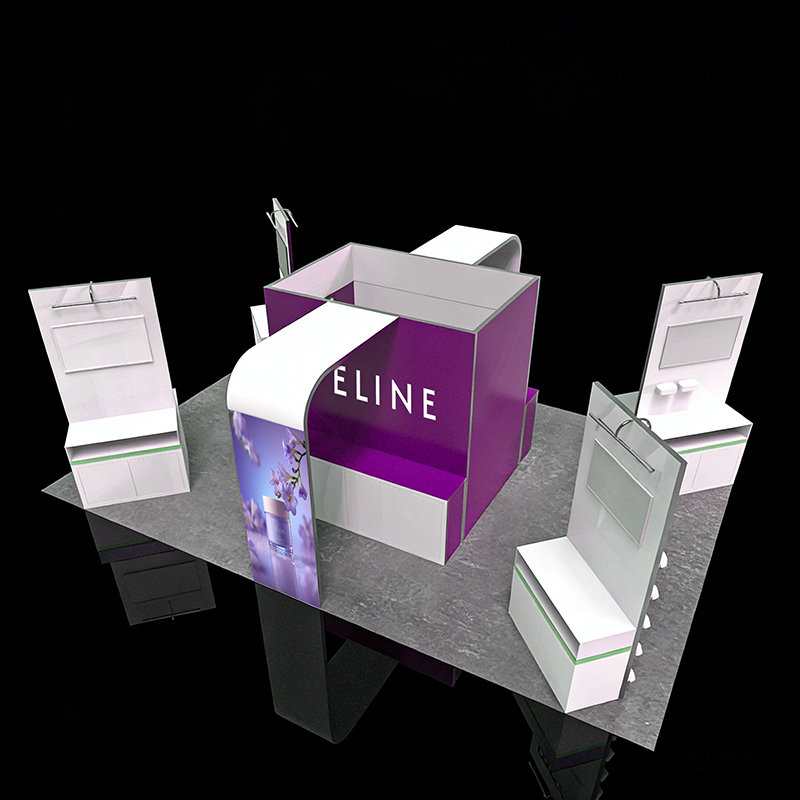
Understanding Booth Stand Fundamentals for SME Budget Constraints
What Defines a Booth Stand? Core Components and Functional Roles
A booth stand is the physical foundation of an SME’s trade show presence, built around three integrated elements: a structural framework (typically aircraft-grade aluminum extrusion), display panels (fabric or rigid), and brand graphics. Its modularity enables cost-efficient reconfiguration across events without sacrificing durability. Unlike permanent installations, portable systems prioritize tool-free assembly—cutting labor time by up to 40% versus traditional builds—and are engineered specifically for standard 10×10 ft spaces. Key functional requirements include rapid deployment (under two hours), spatial efficiency, and weight under 50kg to minimize freight costs.
Why Booth Stand Choice Directly Impacts ROI: Stability, Setup Time, and Brand Perception
An ill-suited booth stand directly undermines event ROI. Research from the Ponemon Institute (2023) found that 68% of SMEs lost qualified leads due to unstable or unprofessional displays. Three interdependent factors drive measurable financial impact:
- Stability: Poor engineering leads to on-site failures, incurring an average $740,000 annually in damage, replacement, and downtime costs across SME exhibitors.
- Setup Efficiency: Every hour saved in assembly reclaims approximately $230 in labor value—time better spent engaging prospects.
- Brand Perception: Premium materials and seamless execution increase visitor dwell time and engagement by 60% compared to low-cost alternatives.
Budget discipline means making intentional trade-offs—not cutting corners. For instance, renting a high-quality modular system ($800–$3,500 per event) delivers professional presentation without capital outlay, especially when entering new markets or testing demand.
Rent vs. Buy: Strategic Booth Stand Decisions Based on Event Frequency
Rental Booth Stands: Ideal for One-Off Events and Market Testing
Rental is the optimal path for SMEs attending one or two shows per year—or launching into unfamiliar markets. It eliminates upfront investment, storage overhead, and long-term maintenance responsibilities. Most rental packages include professional setup and breakdown, freeing internal teams to focus on lead generation rather than logistics. According to trade show analytics, renting is 47% more cost-effective than purchasing for ≤2 annual events. Equally valuable is flexibility: graphic updates, layout changes, and size adjustments happen seamlessly between shows—no structural redesign required.
Purchased Booth Stands: Long-Term Value for ≥3 Annual Shows with Modular Scalability
When exhibiting at three or more events yearly, ownership shifts from expense to strategic asset. Modular aluminum systems deliver compelling five-year ROI: per-event costs drop by 60% after the third show, while consistent branding strengthens market recognition. These stands scale effortlessly—adding lighting, counters, or digital displays as needs evolve—and respond instantly to last-minute venue changes. Built for longevity, top-tier frames withstand 200+ setups, and leading manufacturers back them with lifetime structural warranties. While rentals range from $800–$3,500 per event, purchasing becomes financially advantageous starting at the third exhibition.
Booth Stand Types Optimized for SME Footprint and Visibility
Inline Booth Stands: Space-Efficient and Budget-Friendly for 10×10 ft Standard Spaces
Inline booths are purpose-built for the most common trade show footprint: the 10×10 ft space. Their linear, back-wall-oriented configuration maximizes branding surface area while optimizing aisle-facing engagement. Designed for speed and simplicity, they ship flat-packed—reducing storage volume by 60%—and assemble in under 30 minutes using intuitive, numbered components. This predictability makes them ideal for SMEs prioritizing budget control and operational ease over structural customization, particularly those attending one or two shows annually.
Corner & Peninsula Booth Stands: Higher Visibility Options with Incremental Cost Premium
Corner and peninsula configurations significantly elevate visibility by leveraging venue geometry. Corner booths offer dual open sides—increasing attendee access points by 50% over inline equivalents—while peninsula stands extend that advantage to three exposed facades, transforming larger footprints (e.g., 20×20 ft) into immersive environments. Though priced 15–25% higher than basic inline models, their traffic density and multi-angle sightlines justify the premium for SMEs targeting three or more annual events. Event marketing data shows such layouts drive 34% higher lead capture during live product demonstrations—making them a high-impact growth lever when scaled strategically.
Lightweight, Portable Booth Stands: Aluminum Extrusion and SEG Fabric Systems
Aluminum Extrusion Booth Stands: 60% Weight Reduction and Tool-Free Assembly
Aluminum extrusion forms the intelligent core of modern portable booth stands—delivering a 60% weight reduction over steel alternatives without compromising rigidity or lifespan. Its precision-engineered profiles support tool-free assembly via push-lock connectors and intuitive numbering, enabling reliable one-person setup in under 10 minutes. That speed translates directly to labor savings and reduced onsite stress. Equally important is adaptability: the same frame can be reconfigured for inline, corner, or peninsula layouts—future-proofing the investment across evolving event strategies.
SEG Fabric Graphics Integration: Seamless Visual Impact Without Added Structural Cost
Silicone Edge Graphics (SEG) fabric turns lightweight aluminum frames into high-fidelity branding platforms. Tension-mounted onto extrusion channels, SEG creates wrinkle-free, vibrant surfaces with museum-grade color fidelity—enhancing perceived brand quality. Critically, the fabric adds zero structural weight and ships compactly, lowering logistics expenses by up to 40%. Installation requires no tools: silicone beads slot directly into grooves, enabling fast, clean graphic swaps between events. Combined with aluminum’s portability, SEG delivers premium visual impact at portable-system economics—maximizing both impression and ROI through reuse, minimal storage, and effortless refresh.
FAQ
What is a booth stand?
A booth stand is the physical structure used by SMEs at trade shows, consisting of a structural framework, display panels, and brand graphics.
Why is booth stand choice important for SMEs?
The choice of a booth stand affects event ROI by influencing stability, setup efficiency, and brand perception.
Should I rent or buy a booth stand?
Renting is better for occasional events or market testing, while purchasing is cost-effective for more frequent shows.
What types of booth stands are available for SMEs?
Options include inline, corner, and peninsula booths, each with varying visibility and cost considerations.
What are the benefits of aluminum extrusion booth stands?
Aluminum extrusion provides lightweight, tool-free assembly and adaptability for different booth layouts.