EN
EN

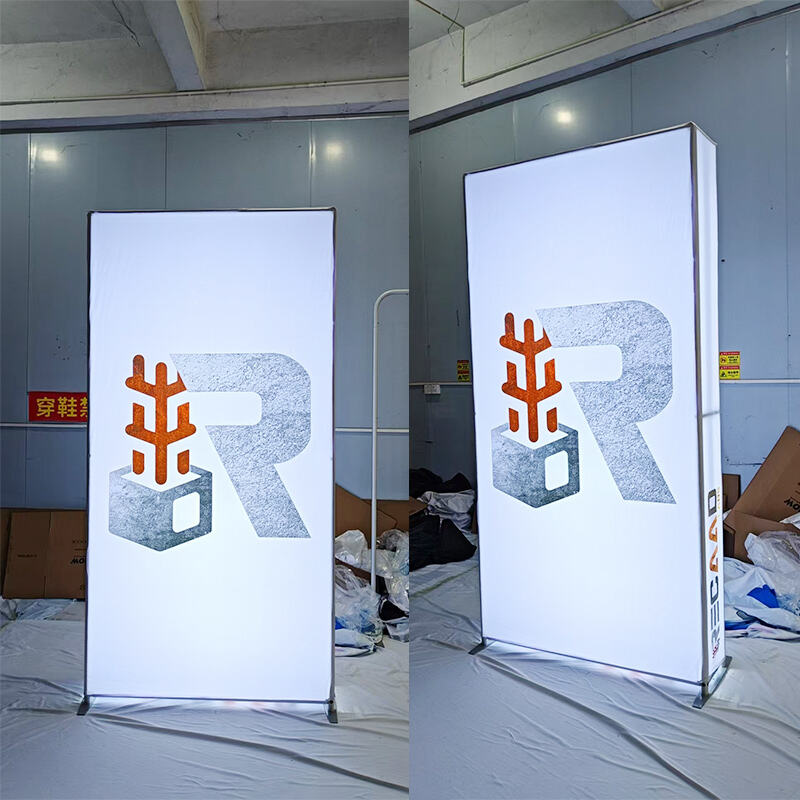
The Strategic Advantages of Fabric Lightboxes in High-Traffic Commercial Environments
Speed-to-Install: Modular frames and tensioned fabric enabling <15-minute setup for pop-ups and trade shows
Modular aluminum frames with tensioned fabric panels enable rapid, single-person assembly in under 15 minutes—critical for time-sensitive environments like trade shows, where venue access windows are tight and labor resources constrained. The tool-free, push-fit mechanism eliminates the need for specialized technicians and reduces installation costs by up to 40% compared to traditional backlit displays.
Visual Impact: Seamless, high-resolution dye-sublimated graphics with uniform LED backlighting
Dye-sublimation printing directly onto tensioned textile surfaces delivers wrinkle-resistant, high-resolution graphics with 98% color accuracy and a seamless, professional finish—even in premium retail or corporate lobbies. Paired with energy-efficient, evenly distributed LED backlighting that eliminates hotspots, this combination significantly enhances visual clarity in crowded settings and boosts brand recall by 63%, per peer-reviewed visual perception studies.
Fabric Lightboxes vs. Traditional Backlit Displays: A Data-Driven 2026 Comparison
Operational efficiency: 68% faster installation and 42% lower logistics costs (2025 Signage Industry Benchmark Report)
Fabric lightboxes outperform rigid acrylic alternatives on core operational metrics. Their modular design enables tool-free assembly and eliminates complex alignment procedures, accelerating installation by 68%—a decisive advantage during compressed trade show load-in periods. At just 10–15kg per panel, they cut freight volume nearly in half versus conventional displays, reducing logistics costs by 42% according to the 2025 Signage Industry Benchmark Report.
Design flexibility: Scalable sizing, curved configurations, and re-skinning capability without frame replacement
Unlike fixed-frame systems requiring full replacement for dimensional or aesthetic updates, fabric lightboxes offer true scalability—from compact 60×90 cm units to expansive 3×6 m feature walls—using the same aluminum extrusion framework. The tensioned fabric system supports concave and convex curves, enabling immersive spatial branding impossible with rigid materials. Critically, graphic updates take minutes: simply swap the silicone-edge graphic panel to refresh messaging across seasonal campaigns or multi-city exhibitions—no frame modification or disposal required.
Sustainability and Future-Proofing: How Fabric Lightboxes Align with B2B ESG and ROI Goals
Eco-material innovation: Recycled polyester fabrics and RoHS-compliant, dimmable LED drivers
Sustainability is engineered into modern fabric lightboxes. Recycled polyester fabrics—containing 30–51% post-consumer waste—maintain print fidelity while reducing reliance on virgin plastics. Integrated RoHS-compliant LED drivers eliminate hazardous substances and support smart dimming protocols, cutting power use by up to 40% during off-peak hours. Aircraft-grade aluminum frames, often made from recycled content, ensure structural integrity and full end-of-life recyclability—advancing circular economy principles.
Lifecycle economics: 3x average reusability vs. rigid acrylic displays—reducing CapEx over multi-campaign use
Fabric lightboxes deliver compelling long-term value: industry data confirms they sustain three times more installations than rigid acrylic displays before retirement. This stems from three interlocking advantages—graphics replaced 15× faster than refacing rigid units; aluminum frames rated for 200+ deployments; and 70% lighter weight slashing shipping and handling expenses. Over five years, these factors reduce total Capital Expenditure (CapEx) by 42%, per the 2025 Signage Industry Benchmark Report—aligning ESG commitments with measurable financial resilience.
FAQ
What makes fabric lightboxes faster to install compared to traditional displays?
Fabric lightboxes use modular aluminum frames and tensioned fabric panels that can be assembled by a single person in under 15 minutes using a tool-free, push-fit mechanism, which reduces both the time and cost of installation.
How do fabric lightboxes enhance visual impact?
The seamless, high-resolution graphics achieved through dye-sublimation printing combined with evenly distributed LED backlighting provide a wrinkle-free, vibrant display, enhancing brand recall significantly.
Why are fabric lightboxes more cost-effective in terms of logistics?
Fabric lightboxes are lightweight and modular, reducing freight volume and eliminating complex assembly processes, cutting logistics costs by 42% compared to traditional displays.
Can fabric lightboxes be customized and resized easily?
Yes, they offer scalable sizing and curved configurations, allowing for easy updates and graphic changes without needing to replace the frame entirely, making them highly adaptable to different settings.
Are fabric lightboxes environmentally friendly?
Yes, fabric lightboxes incorporate recycled polyester fabrics and RoHS-compliant LED drivers, contributing to sustainability efforts by reducing reliance on virgin materials and supporting the circular economy.
Table of Contents
- The Strategic Advantages of Fabric Lightboxes in High-Traffic Commercial Environments
- Fabric Lightboxes vs. Traditional Backlit Displays: A Data-Driven 2026 Comparison
- Sustainability and Future-Proofing: How Fabric Lightboxes Align with B2B ESG and ROI Goals
-
FAQ
- What makes fabric lightboxes faster to install compared to traditional displays?
- How do fabric lightboxes enhance visual impact?
- Why are fabric lightboxes more cost-effective in terms of logistics?
- Can fabric lightboxes be customized and resized easily?
- Are fabric lightboxes environmentally friendly?