EN
EN

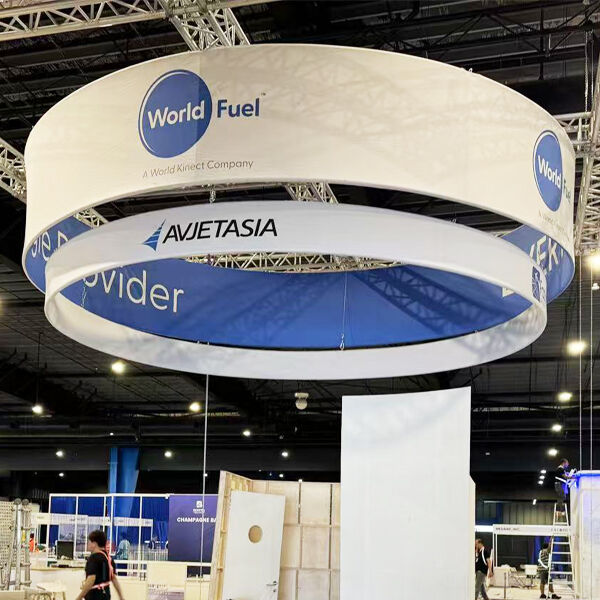
Why Trade Show Ceiling Banners Deliver Unmatched Visibility and Brand Impact
How ceiling placement captures attention across aisles and over booth clutter
Putting signage up high gets around all the mess at floor level where people's attention gets lost among displays and brochures scattered throughout exhibition halls. Trade show ceiling banners take advantage of empty space above heads to form a sort of circular brand presence around each booth. The science backs this up too people tend to notice things hanging overhead much quicker than stuff right at eye level according to studies showing overhead visuals get processed about 35 percent faster by our brains. When companies hang their promotional materials from the ceiling, they basically control what visitors see no matter which direction they come from. Those lofty spaces become valuable spots for keeping logos visible even when the rest of the venue feels packed with activity and competition for attention.
Data-backed impact: Increased dwell time and recall in high-traffic venues (e.g., CES, NRF)
At major events like CES and NRF, exhibitors using overhead banners saw measurable gains:
- 42% longer dwell times near booths
- 50% higher brand recall among attendees
- 28% increase in booth traffic compared to ground signage alone
This aligns with neuroscience principles elevated visuals stand out due to their novelty in trade show environments, triggering stronger memory encoding. When placed above high-traffic zones, ceiling banners generate up to 7Ã more impressions than standard banners, turning passive exposure into active brand recognition.
Choosing the Right Material for Trade Show Ceiling Banners
Vinyl vs. polyester: Weight, durability, light diffusion, and wrinkle resistance compared
Vinyl fabric weighing between 15 to 20 ounces offers excellent resistance to wrinkles and maintains its shape well, making it great for big spaces where drooping would block views. The material's heft gives it a nice clean fall when hung, though this does mean stronger support hardware is needed for installation. Polyester on the other hand weighs around 8 to 13 ounces and works really well for backlit displays since it spreads light evenly across surfaces. But there's a catch - it tends to develop those annoying creases during shipping and setup. When we look at how these materials hold up over time, tests indicate that vinyl can handle over 200 setups before showing much wear along the edges. Polyester isn't so lucky though, losing about 40 percent of its tear strength after only about fifty uses according to the latest Material Durability Index from 2024. That makes vinyl particularly valuable for busy places like CES trade shows where accidental bumps against display stands are pretty common.
Safety and compliance: Meeting fire ratings (NFPA 701), rigging load limits, and venue requirements
Ceiling banners need to pass NFPA 701 flame retardant tests otherwise exhibitors face getting booted from big trade shows pretty fast. Most vinyl materials come ready made with Class A fire ratings right off the shelf, but polyester needs special chemical coatings that tend to wear off within around 12 to maybe 18 months depending on usage conditions. When it comes to hanging these things, weight matters a lot too. A standard sized 20 by 10 foot vinyl banner when dry still clocks in at about 28 pounds, so truss systems should be able to handle at least five times that weight when movement happens during setup. Places such as McCormick Place have strict no drilling rules in place. Magnetic anchors work well there since they can hold approximately 30 pounds against steel beams without running afoul of venue regulations. For spaces where air conditioning systems blow pretty hard, mesh backed polyester actually stands up better to those 15 mile per hour drafts compared to regular solid vinyl banners, which makes sense why many event planners opt for this material choice in convention centers.
Installation Realities: Hardware, Ceiling Types, and Venue Restrictions
Rigging solutions for truss, grid, and acoustic tile ceilings pros and limitations
When it comes to hanging those big heavy ceiling banners, truss systems definitely take the cake for maximum load capacity. But there's a catch - these setups need trained professionals to install them properly and most venues want written approval beforehand. Suspension grids work fine for regular sized banners, though event planners often struggle with getting the weight just right across the grid points to stop things from drooping down mid-event. Acoustic tile ceilings are probably the biggest headache of all. Special adhesives or magnetic mounts help protect the tiles from damage, but they also put serious limits on how big the banners can be and what kind of wind forces they can withstand. Looking at industry standards, most convention centers cap hardware loads somewhere between 5 and 10 pounds per square foot according to recent safety regulations.
Navigating 'no-drill' policies: Secure alternatives that preserve visual scale and stability
In situations where drilling isn't allowed, tension cable systems offer solid overhead mounting solutions right between those big structural columns we see everywhere. These industrial grade hook and loop fasteners stick really well to metal beams and truss work, holding even large 8 by 8 foot banners without leaving behind any sticky mess. Fabric banners get another boost from magnetic edges that snap right onto steel surfaces for quick setup. And here's something important to remember: every single material needs to meet NFPA 701 standards otherwise event organizers might face serious penalties. We've seen cases where non compliant setups resulted in fines over five grand at major convention centers such as McCormick Place Chicago or the massive complex in Las Vegas. Makes sense when you think about fire safety regulations these places have to follow.
Design Best Practices for Maximum Legibility at Height
Optimizing Visual Impact from Elevated Positions
Ceiling banners at trade shows have their own set of readability problems because people often see them from far away and at odd angles. Go for those really thick sans serif fonts like Helvetica Bold when possible, making sure each letter is at least three inches tall for every ten feet the banner hangs above ground level. Colors need to pop too, so black on yellow works great or maybe white against navy blue if the background isn't too busy. The message should be short and sweet, ideally no more than seven words max, sticking to what makes the product special rather than listing features. Forget about complicated artwork that gets lost when viewed from below. Stick with simple vector based logos and leave plenty of empty space around everything. And don't skip testing the design first. Use computer simulations showing how it looks from thirty feet away or more before sending anything off for printing.
FAQs
What are the benefits of using ceiling banners at trade shows?
Ceiling banners provide unmatched visibility by utilizing overhead space, which can capture attention over the clutter of booths and increase brand recall and booth traffic.
How do vinyl and polyester materials compare for trade show banners?
Vinyl is durable, wrinkle-resistant, and preferable for larger setups, while polyester is lighter and better for backlit displays but may crease more easily.
What are the safety considerations for installing ceiling banners?
Ceiling banners must meet fire retardant standards (NFPA 701), and venues usually have strict rigging load limits to ensure safety compliance.
How can banners be installed without drilling?
Alternatives like tension cable systems, industrial-grade fasteners, and magnetic mounts offer secure installation without the need for drilling.